

Introduction
I started my life in the U.S. and I thought I had my finances under control — until I realized my “coffee habit” was costing me over $150 a month. That was my wake‑up call. I learned that expense tracking isn’t about restriction; it’s about awareness and empowerment.
If you’ve ever wondered where your money disappears each month, this post will show you how to take control of your money flow using smart, practical, and proven expense tracking strategies.
Jason’s Story on Expense Tracking
A client named Jason, a 32‑year‑old software engineer from Seattle, earned a six‑figure salary but still felt broke every month. When we reviewed his spending, we found $600 going toward unused subscriptions and impulse buys.
Once Jason started tracking his expenses using a simple spreadsheet and the Monthly Budget Planner, he cut unnecessary spending by 25% in just two months — without feeling deprived.
(Interlink: Financial Literacy: Skills to Master Your Money Better)
Step 1: Why Expense Tracking Matters
Expense tracking is the foundation of financial freedom. It helps you:
- Identify spending leaks.
- Understand your habits.
- Set realistic savings goals.
- Build confidence in your financial decisions.
Think of it as a financial mirror — it reflects your priorities and helps you realign them with your goals.
(Interlink: Minimalism and Money: How Less Spending Builds More Freedom)
Step 2: The Psychology Behind Spending
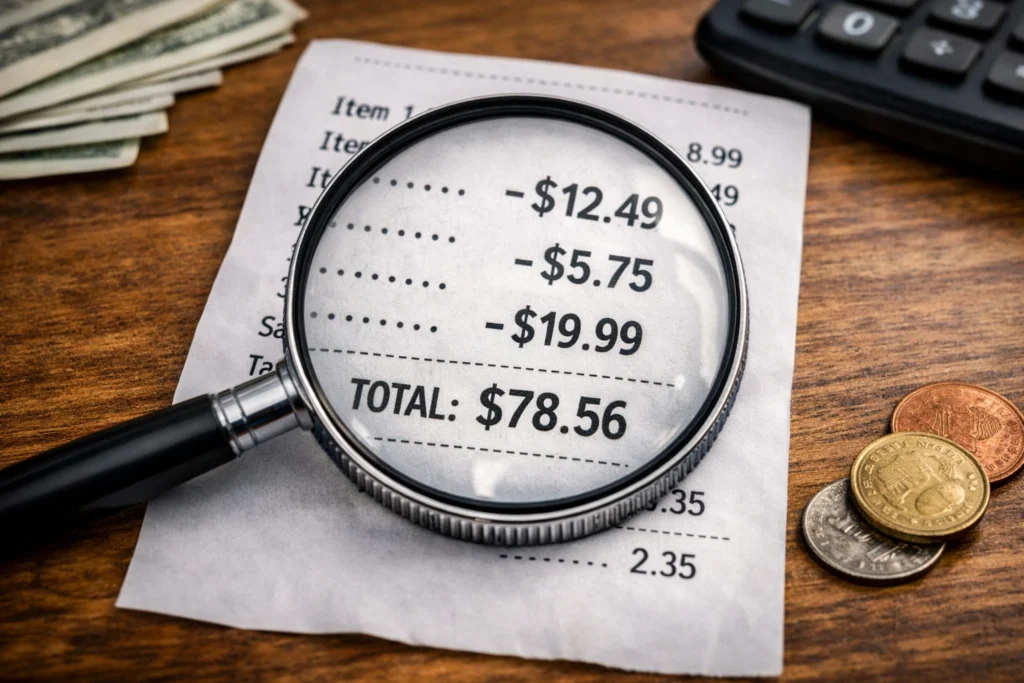
Most people don’t overspend because they’re careless — they overspend because they’re unaware. Small purchases add up silently.
Example:
- $5 coffee × 20 days = $100/month
- $15 streaming × 5 services = $75/month
- $25 takeout × 8 times = $200/month
That’s nearly $400 you could redirect toward your Debt Payoff Planner or Financial Freedom Blueprint Ebook goals.
(Interlink: Slow and Steady Wealth: Proven Habits That Create Lasting Riches)
Step 3: How to Start Tracking Expenses
You don’t need fancy tools — just consistency.
Here’s how to begin:
- List all income sources.
- Categorize expenses (housing, food, transportation, entertainment, etc.).
- Record every transaction — daily or weekly.
- Review monthly trends.
Tools to make it easier:
- 📊 Monthly Budget Planner → Track daily expenses and visualize spending patterns.
- 💳 Debt Payoff Planner → Identify how spending affects debt repayment.
- 📘 Financial Freedom Blueprint Ebook → Learn how to automate expense tracking and savings.
- 🛠️ Complete Financial Toolkit Bundle → Manage all financial goals in one place.
(Interlink: The 50/30/20 Rule: A Simple Formula for Smarter Budgeting)
Step 4: Categorize Smartly
Don’t just track — analyze. Divide your expenses into three categories:
- Needs: Rent, groceries, utilities.
- Wants: Dining out, entertainment, shopping.
- Goals: Savings, investments, debt repayment.
Once you see where your money goes, you’ll naturally start making better choices.
(Interlink: How Much Should You Save vs Invest – Explained Easy Way)
Step 5: Automate and Simplify
Automation is your best friend. Set up automatic transfers to savings or investment accounts right after payday.
Example: If you earn $5,000 monthly:
- $500 → Emergency Fund
- $300 → Investments
- $200 → Debt Payoff
Use the Monthly Budget Planner to schedule these transfers and track progress.
(Interlink: Automated Savings – The Easy Way to Build Wealth Consistently)
Step 6: Real‑World Example
A couple from Denver used the Complete Financial Toolkit Bundle to track expenses across categories. They discovered they were spending $250/month on unused subscriptions and $180 on impulse buys.
After reallocating those funds toward their Side Hustle Starter Kit, they built a small online business that now earns $500/month — turning wasted money into income.
Step 7: Frequently Asked Questions
Q1: How often should I track expenses? Daily tracking builds awareness; weekly reviews maintain consistency.
Q2: What’s the best method — app or spreadsheet? Start simple. A spreadsheet or the Monthly Budget Planner works perfectly for beginners.
Q3: How do I stay motivated? Set short‑term goals — like saving $100/week — and celebrate small wins.
Q4: How do your tools help?
- Monthly Budget Planner → Tracks daily spending.
- Debt Payoff Planner → Shows how cutting expenses accelerates debt freedom.
- Financial Freedom Ebook → Guides automation and mindset.
- Complete Toolkit Bundle → Combines all tools for total control.
(Interlink: Financial Literacy: Skills to Master Your Money Better)
Step 8: Common Mistakes to Avoid
- Ignoring small purchases.
- Not reviewing monthly trends.
- Tracking inconsistently.
- Failing to connect spending with goals.
Step 9: The Emotional Side of Expense Tracking
Expense tracking isn’t about guilt — it’s about clarity. When you know where your money goes, you feel empowered, not restricted.
It’s the difference between reacting to bills and responding with confidence.
Step 10: The Verdict — Awareness Creates Freedom
Expense tracking is the first step toward financial independence. It’s not about cutting joy; it’s about redirecting money toward what truly matters.
Start today with the 📊 Monthly Budget Planner, 💳 Debt Payoff Planner, 🚀 Side Hustle Starter Kit, 📘 Financial Freedom Ebook, and 🛠️ Complete Financial Freedom Toolkit Bundle — your complete system for mastering money flow and building lasting wealth.
Disclaimer
This article is for educational purposes only and does not constitute financial advice. Always consult with a licensed financial advisor before making budgeting or investment decisions.