
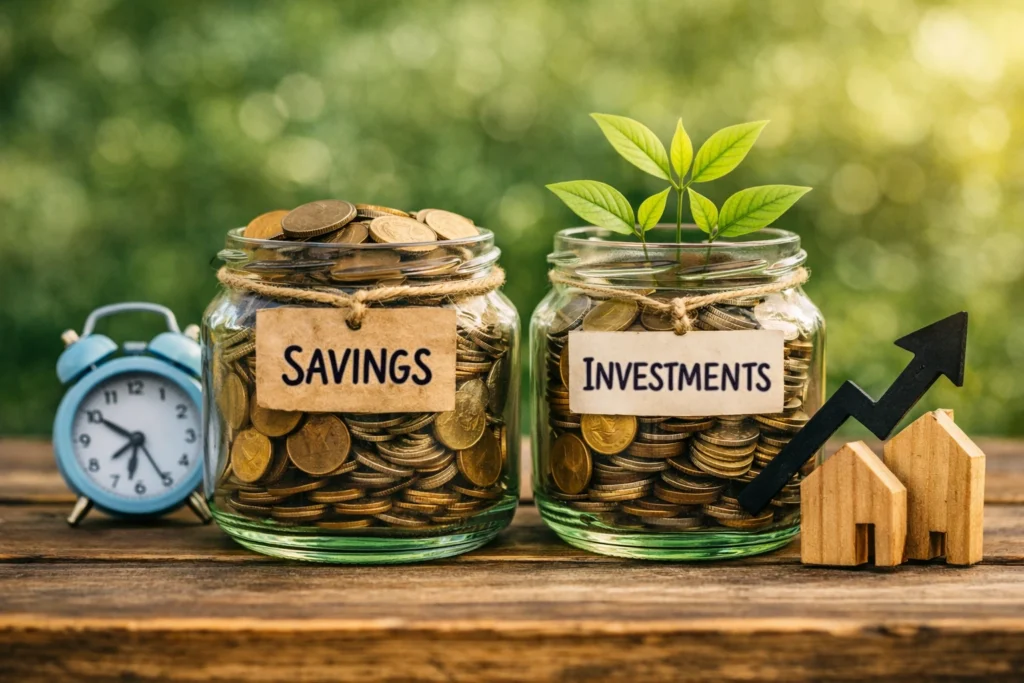
Saving vs Investing – When I first started managing my finances in the U.S., I was proud of how much I could save. Every paycheck, I’d move a chunk into my savings account and watch the balance grow. It felt safe, responsible, and even a little satisfying. But after a few years, I realized something unsettling — my money wasn’t growing fast enough to keep up with inflation. Meanwhile, a colleague who invested regularly was seeing his wealth multiply. That’s when I learned the truth: saving alone won’t make you rich — investing will.
The Hidden Limitations of Saving
Saving is essential for financial security and emergencies, but it’s not a wealth‑building strategy. A savings account earns minimal interest, often less than inflation. I remember checking my account after a year and realizing that while I had more dollars, those dollars could buy less. Saving preserves your money; it doesn’t grow it.
Think of saving as the foundation — your safety net. It’s where you keep funds for short‑term goals or unexpected expenses. But if you want to build wealth, you need to make your money work harder.
How Investing Builds Real Wealth – Saving vs Investing
Investing is where growth happens. When I first invested in index funds and ETFs, I was nervous — the market fluctuates, and risk feels uncomfortable. But over time, I saw the power of compound interest. My returns started generating their own returns, and the growth curve steepened.
Investing allows your money to participate in the economy — in businesses, innovation, and progress. While savings protect you, investments propel you forward.
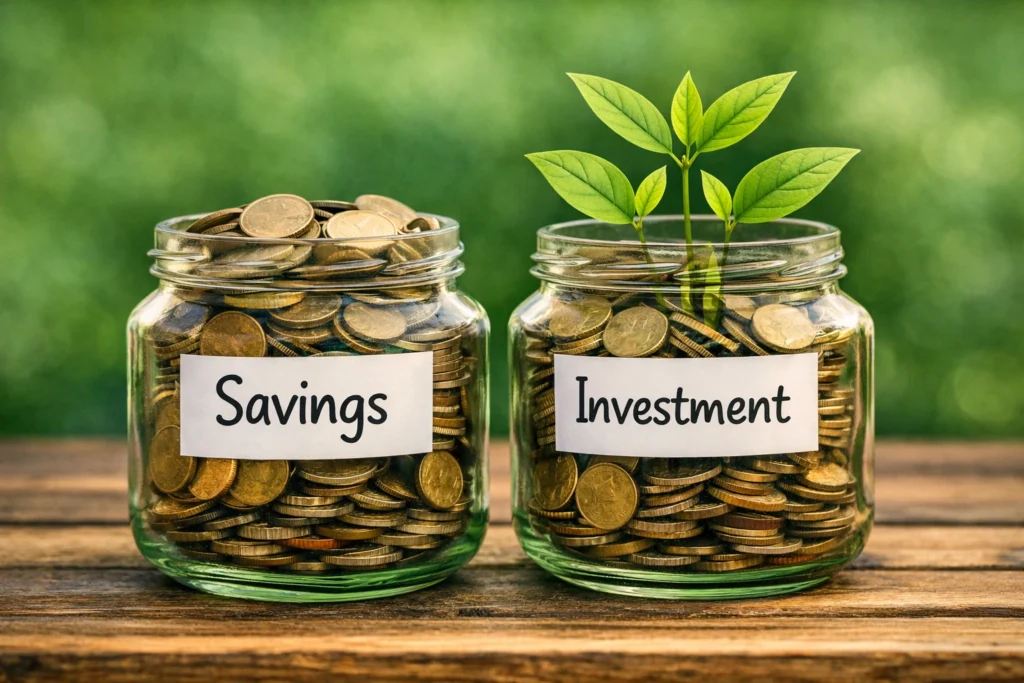
Saving vs. Investing: The Key Differences
| Factor | Saving | Investing |
|---|---|---|
| Purpose | Short‑term security | Long‑term wealth growth |
| Risk | Very low | Moderate to high |
| Return | 3–4% annually (if lucky) | 8–12% average long‑term |
| Liquidity | Immediate access | May require time to sell |
| Goal | Preserve capital | Multiply capital |
When to Save and When to Invest
Before diving into investing, I built an emergency fund — enough to cover six months of expenses. That gave me peace of mind. Once that was in place, I started investing small amounts monthly.
👉 Related reading:
- Compound Interest Explained: How Small Savings Grow Into Wealth
- Investing for Beginners: Step‑by‑Step Guide to Start Building Wealth
- Emergency Funds Explained: How to Build Your Ultimate Financial Safety Net
My Real‑Life Investing Journey
In my early 30s, I invested $5,000 in a diversified index fund. I didn’t touch it for years. By my 40s, that investment had more than doubled — not because I added more money, but because time and compounding did the heavy lifting.
That experience changed how I viewed money. Saving gave me stability; investing gave me freedom. It’s the difference between standing still and moving forward.
The Mindset Shift You Need
Many people hesitate to invest because they fear losing money. But the real risk is not investing at all. Inflation quietly erodes savings every year. The longer you wait, the harder it becomes to catch up.
Start small, stay consistent, and think long‑term. Investing isn’t about timing the market — it’s about time in the market.
Conclusion: Make Your Money Work for You
Saving is like planting seeds and leaving them in dry soil. Investing is watering those seeds and watching them grow. Both are important, but only one builds wealth.
So, don’t just save — invest wisely, stay patient, and let your money grow while you sleep.
Ready to take your financial journey further? Discover practical strategies and step‑by‑step guidance in my eBook Financial Freedom Blueprint: Build Wealth, Clear Debt, and Live Free — One Step at a Time on Amazon Kindle today and start building the life you deserve.
Disclaimer
This article is for educational and informational purposes only and does not constitute financial, investment, or legal advice. The examples shared reflect personal experiences and general market principles. Always conduct your own research or consult a licensed financial advisor before making investment decisions.