
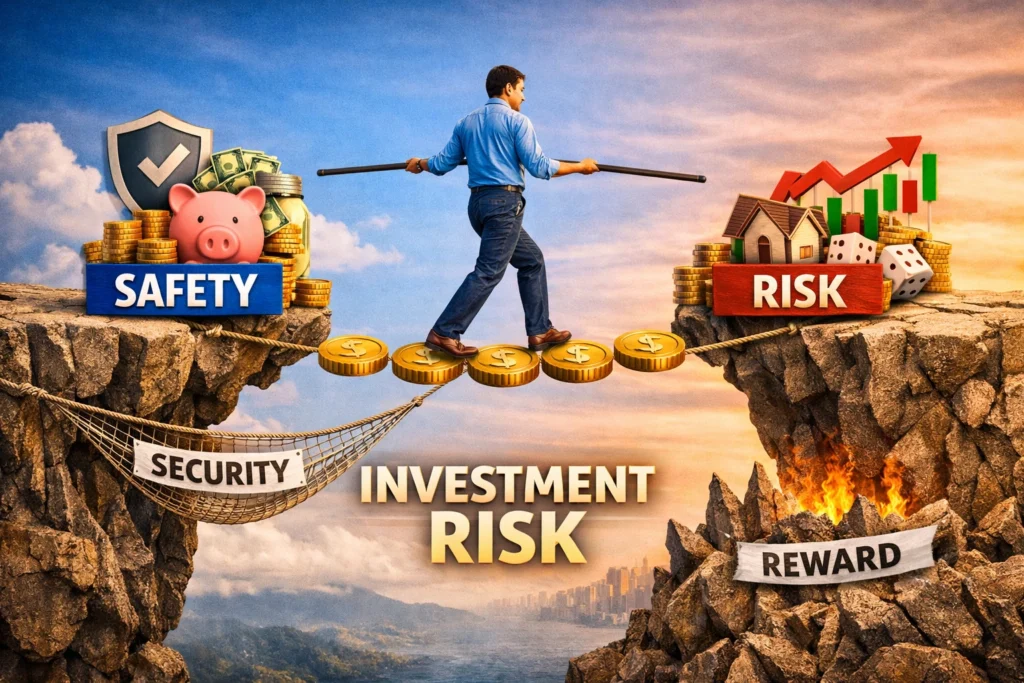
I began investing in the U.S., I thought risk was something to avoid at all costs. I’d only choose “safe” options — savings accounts, CDs, and low‑yield bonds. But over time, I realized that understanding risk in investments is not about avoiding it; it’s about managing it wisely. Every successful investor learns that risk and reward go hand in hand — and mastering that balance is the key to long‑term growth.
What Is Risk in Investments?
Risk in Investments is the possibility that your returns may differ from expectations — sometimes higher, sometimes lower. It’s what makes investing exciting and challenging. There are different types of risk: market risk, inflation risk, liquidity risk, and credit risk. Each affects your portfolio differently.
👉 If you’re new to investing, the [Financial Freedom Blueprint] Ebook gives a step‑by‑step guide to understanding these risks and building a diversified portfolio.
Why Risk Is Necessary for Growth
Without risk, there’s no reward. Savings accounts protect your money, but they don’t grow it fast enough to beat inflation. Investments, on the other hand, expose you to market fluctuations but offer higher potential returns.
When I invested in index funds during a market dip, it felt risky — but that decision paid off years later. The key was patience and diversification. (See my post The Power of Diversification: How Smart Investors Reduce Risk for how spreading investments helps manage uncertainty.)

Types of Investment Risk You Should Know
1. Market Risk – Prices fluctuate due to economic changes. 2. Inflation Risk – Your money loses value over time if returns don’t outpace inflation. 3. Liquidity Risk – Some assets can’t be sold quickly without loss. 4. Credit Risk – Bonds or loans may default.
Understanding these helps you choose investments that match your comfort level.
👉 Use the [Complete Financial Toolkit] — $39 worth of tools for just $12 — to plan your savings, side hustles, and investments together for balanced growth.
How to Manage Risk Effectively
- Diversify Your Portfolio Spread investments across stocks, bonds, and real estate.
- Invest for the Long Term Short‑term volatility is normal; long‑term growth matters.
- Know Your Risk Tolerance Assess how much fluctuation you can handle emotionally and financially.
- Start Small and Learn Begin with low‑cost index funds or ETFs.
- Review Regularly Rebalance your portfolio every 6–12 months.
👉 The [Monthly Budget Planner] helps you allocate funds between savings and investments so you can manage risk without overspending.
Real‑Life Example
A friend of mine invested heavily in high‑growth tech stocks during the pandemic. When the market corrected, his portfolio dropped sharply. Meanwhile, my diversified mix — including dividend stocks, bonds, and international ETFs — stayed stable. That’s the difference between taking calculated risk and blind risk. Smart investors don’t eliminate risk; they control it.
Interlinks
- The Power of Diversification: How Smart Investors Reduce Risk
- How Much Should You Save vs Invest – Explained Easy Way
- Emergency Savings or Investment Portfolio — What Comes First?
Quick Comparison Table
| Risk Type | Impact | How to Manage |
|---|---|---|
| Market Risk | Price fluctuations | Diversify investments |
| Inflation Risk | Reduced purchasing power | Invest in growth assets |
| Liquidity Risk | Hard to sell assets | Keep emergency savings |
| Credit Risk | Default possibility | Choose quality bonds |
The Psychology of Risk
Risk isn’t just numbers — it’s emotion. Fear and greed drive many investment decisions. Learning to stay calm during market swings is part of mastering risk. When you understand that volatility is temporary, you stop reacting and start strategizing.
Conclusion
Mastering risk in investments is about balance — not fear. Learn what risks exist, diversify wisely, and invest consistently. Over time, you’ll find that risk becomes your ally, not your enemy.
👉 Ready to take control of your financial journey? Get the [Complete Financial Toolkit] — everything you need to manage money, eliminate debt, and build long‑term financial freedom.
Disclaimer
This article is for educational purposes only and does not constitute financial advice. Please consult a licensed financial advisor before making investment decisions.