
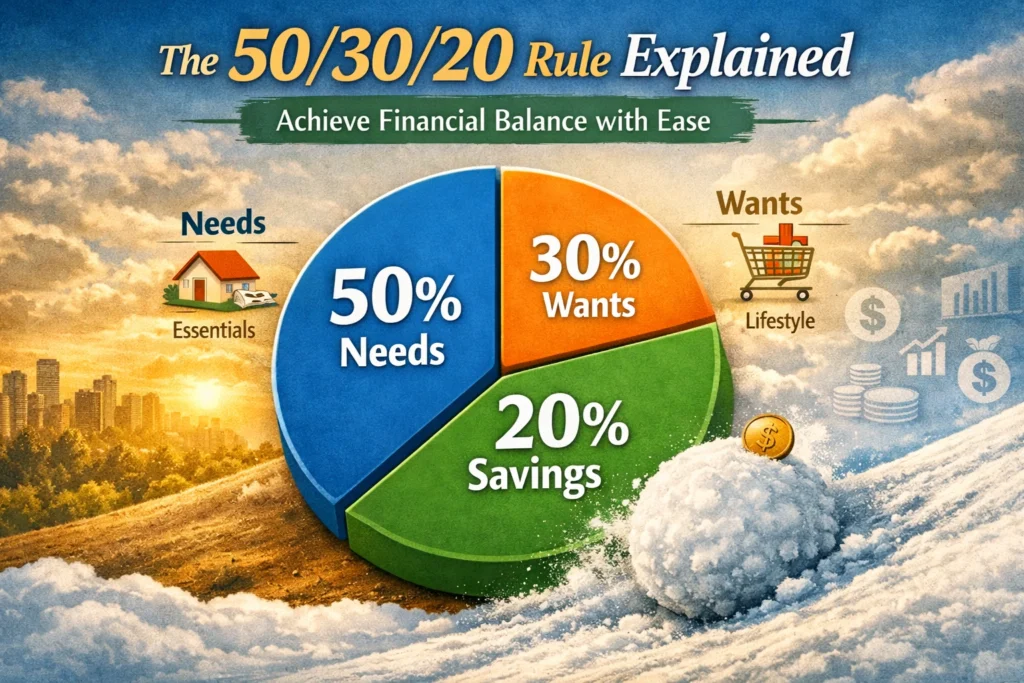
When I first moved to the U.S., managing money felt like juggling flaming torches. Between rent, groceries, and the occasional splurge, I was constantly wondering where my paycheck disappeared. Then I discovered the 50/30/20 rule, and it was like finding a map in a maze. This simple budgeting formula became my compass for keeping income allocation straightforward: 50% for needs, 30% for wants, and 20% for savings.
What is the 50/30/20 rule? It’s a budgeting formula that divides income into 50% needs, 30% wants, and 20% savings
Understanding the 50/30/20 Rule
Back when I was buried in rent and student loans in Chicago, the 50/30/20 rule became my lifeline. It breaks down like this:
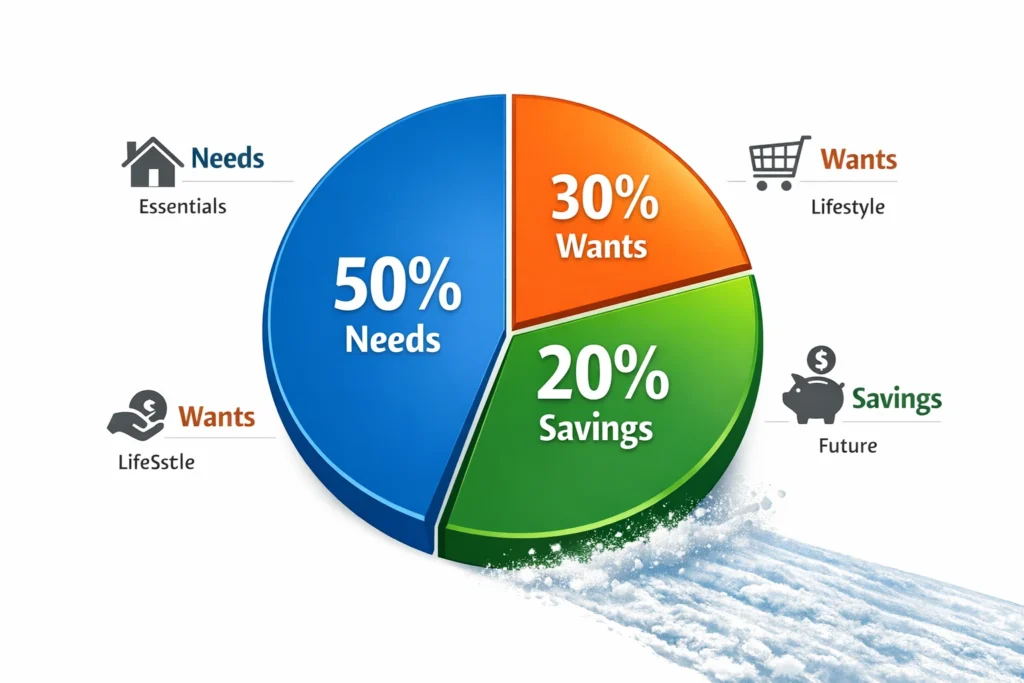
- 50% Needs: These are the essentials — rent, utilities, groceries, insurance, and transportation.
- 30% Wants: This is the fun stuff — dining out, streaming subscriptions, hobbies, and vacations.
- 20% Savings: This is for your future — emergency fund, investments, and debt repayment.
It’s simple, visual, and flexible. You don’t need complex spreadsheets or financial software — just discipline and awareness.
(Related: Budgeting Basics for Beginners to start your financial journey.)
50% for Needs: Covering the Essentials
I remember stressing over rent payments and utility bills every month. Allocating 50% of my income to needs made survival simpler. I wasn’t second‑guessing if I could afford electricity or groceries — I just made sure the essentials were covered first.
This clarity helped me avoid late fees and unnecessary debt. I even started negotiating better deals on internet and insurance, realizing that every dollar saved in “needs” could strengthen my “savings” category.
30% for Wants: Enjoying Life Guilt‑Free
In my early career, I struggled with spending guilt. Every time I bought a concert ticket or ordered takeout, I felt irresponsible. The 50/30/20 rule changed that. It taught me to set aside 30% for the things I love — concerts, gadgets, or even a weekend getaway.
It felt good to splurge responsibly, knowing it was part of the plan. I wasn’t overspending; I was budgeting joyfully.
(Related: Smart Ways to Save Money Every Day for saving on wants.)
20% for Savings: Building Your Future
The best part? Setting aside 20% for savings felt like investing in my future. Whether it was an emergency fund, retirement, or paying off debt, that 20% became my safety net.
Over the years, this habit turned small contributions into big milestones — buying a home, starting a business, and achieving financial peace. It’s amazing how consistent saving can transform your financial horizon.
(Related: Compound Interest Explained on growing your savings.)
Why the 50/30/20 Rule Works
The beauty of this rule lies in its simplicity. It doesn’t demand perfection — it encourages balance. You can adjust it slightly based on your lifestyle. For instance, if you live in a high‑cost city, you might shift to 60/25/15. The principle remains the same: prioritize essentials, enjoy life, and secure your future.
It’s also psychologically freeing. You stop feeling guilty about spending because you know every dollar has a purpose.
My Real‑Life Example
When I first applied this rule, my monthly income was $4,000. Here’s how it looked:
- Needs (50%) → $2,000: Rent, utilities, groceries, insurance.
- Wants (30%) → $1,200: Dining out, gym, entertainment.
- Savings (20%) → $800: Emergency fund and Roth IRA.
Within a year, I had saved nearly $10,000 — something I’d never managed before. The structure gave me control, and the results gave me confidence.
Tips to Make It Work
- Automate savings: Set up direct transfers to your savings account.
- Track spending: Use apps like Mint or YNAB to monitor categories.
- Review monthly: Adjust percentages if your income or expenses change.
- Stay flexible: Life happens — adapt without abandoning the rule.
Final Thoughts
The 50/30/20 rule turned my budgeting chaos into clarity. It’s a simple formula that balances needs, wants, and savings without the stress. If managing money feels overwhelming, try this formula and watch your finances transform.
Stick to 50% for needs, 30% for wants, and 20% for savings, and you’ll find peace of mind knowing every dollar has a purpose.
Ready to take your financial journey further? Discover practical strategies and step‑by‑step guidance in my eBook Financial Freedom Blueprint: Build Wealth, Clear Debt, and Live Free — One Step at a Time on Amazon Kindle today and start building the life you deserve.
🔹 Related Posts
- Compound Interest Explained: How Small Savings Grow Into Wealth Discover how compound interest can turn modest savings into significant wealth.
- Budgeting Basics for Beginners: Start Your Financial Journey Learn the fundamentals of budgeting to take control of your finances.
- Smart Ways to Save Money Every Day Practical strategies to save money on a daily basis.