
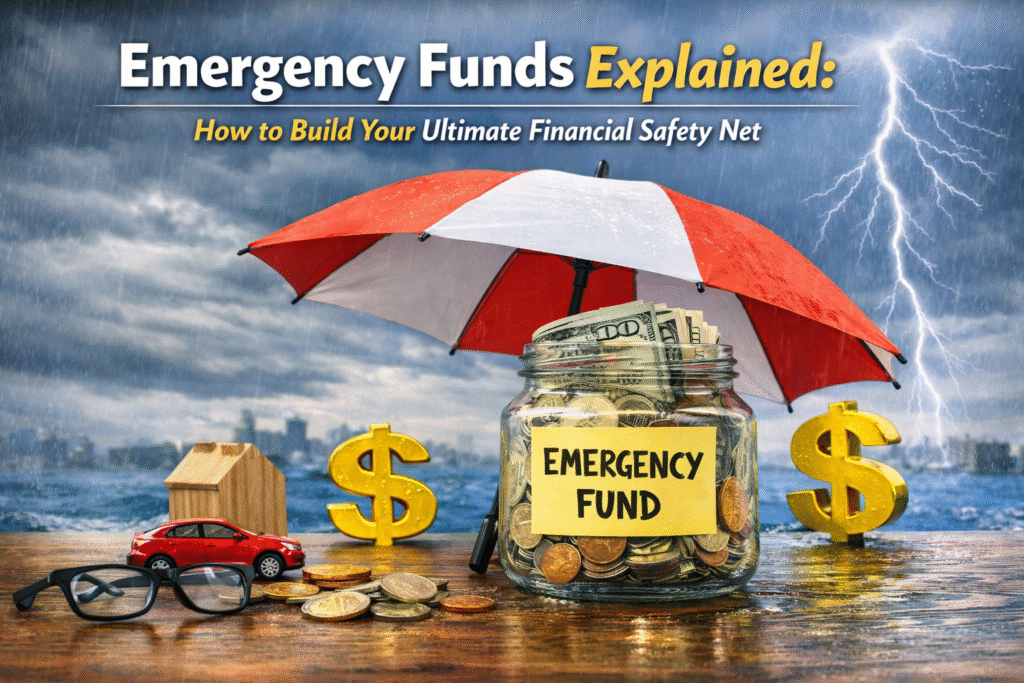
I’ll never forget the day my car broke down on the way to work. The repair bill was more than a month’s rent, and I didn’t have a backup fund which is called emergency fund. That sinking feeling — the mix of panic and helplessness — taught me one of the most valuable lessons in personal finance: life happens, and your wallet needs a safety net.
What are emergency fund? An emergency fund is money set aside to cover unexpected expenses, such as medical bills or job loss.
Steps to build emergency fund:
- Set a savings goal
- Open a separate account
- Automate deposits
- Start small and grow
- Avoid using it for non‑emergencies
An emergency fund isn’t just a savings account; it’s your lifebuoy when the waves of life get rough. It’s what keeps you afloat when unexpected expenses hit — job loss, medical bills, or sudden repairs.
Building financial security becomes much easier when you can clearly track your income, expenses, and savings goals consistently.
What Exactly Is an Emergency Fund?
Think of it as your personal insurance against chaos. It’s money set aside specifically for emergencies — not vacations, not shopping, not impulse buys. It’s the quiet hero that lets you sleep peacefully at night knowing you’re prepared.
How Much Should You Save?
Start small, but start now. Aim for three to six months of living expenses. If that sounds overwhelming, begin with ₹10,000 or $200 — whatever feels doable. The key is consistency. Every deposit, no matter how small, builds your safety net stronger.Where Should You Keep It?
If you want a simple system to organize your finances and track your savings progress more effectively, using the below structured budgeting tool can help you stay consistent.
Your emergency fund should be accessible but separate. A high‑interest savings account or money market fund works best. Avoid locking it in investments that fluctuate — you need stability, not risk.
Related Articles You May Like:
How to Build It Step‑by‑Step
- Automate savings: Set up a monthly transfer right after payday.
- Cut small expenses: Skip one takeout meal a week — redirect that money.
- Use windfalls wisely: Tax refunds, bonuses, or gifts? Add them to your fund.
- Track progress: Watching your balance grow is motivating — it’s proof of your discipline.
Saving money is only one part of financial stability. Reducing debt, increasing income, and building long-term financial habits are equally important for achieving financial freedom.
Why It’s Called a “Rainy Day Fund”
Because rain always comes — sometimes a drizzle, sometimes a storm. When it does, your emergency fund keeps you dry. It’s not about fear; it’s about freedom. You can handle life’s surprises without debt or stress.
⭐ Most Popular (Best Value)
If you want a complete system to improve your finances and build long-term financial freedom:
✔ Monthly Budget Planner
✔ Side Hustle Starter Kit
✔ Debt Payoff Planner
✔ Financial Freedom Blueprint (Ebook)
Get $39 worth of tools for just $12 – 👉 [Get Financial Freedom Toolkit]
Final Thoughts
Building an emergency fund isn’t glamorous, but it’s powerful. It’s the difference between panic and peace. Once you have it, you’ll realize something profound — financial security isn’t about how much you earn, but how prepared you are when life tests you.
Conclusion: This article is for educational purposes only and does not constitute financial advice. Always consult with a licensed financial advisor before making investment decisions.