
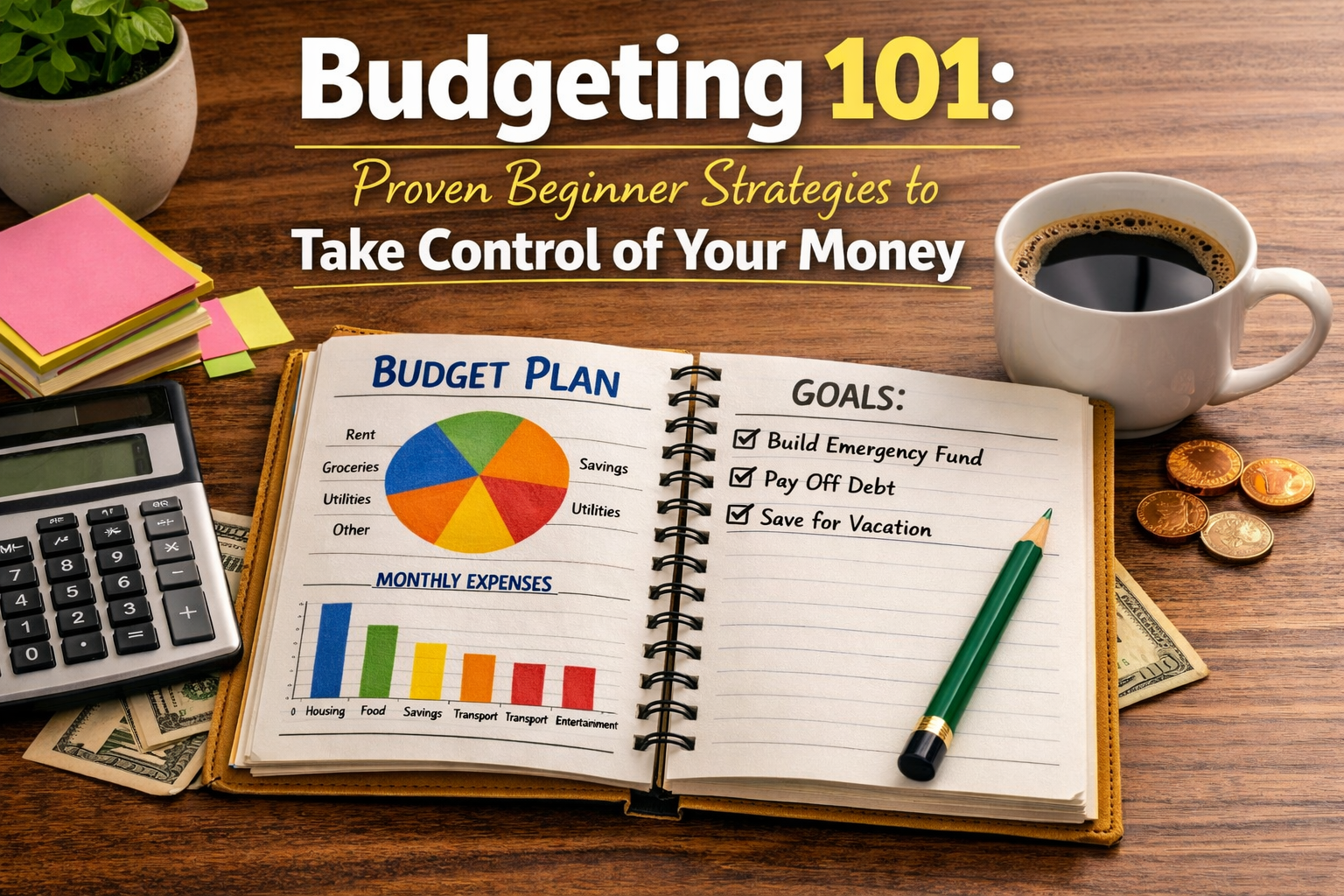
I still remember the first time I sat down with a notebook and tried to make sense of my monthly expenses. Rent, groceries, subscriptions, random coffee runs — it felt like my money was evaporating faster than I could earn it. That moment was my wake‑up call. Budgeting or Budgeting strategies aren’t about restriction; it was about clarity.
If you’ve ever felt the same, this guide is for you — practical, beginner‑friendly strategies that help you take control of your money and finally feel confident about where it’s going.
The biggest mistake most beginners make is trying to manage money mentally instead of using a clear system to track spending, savings, and financial goals.
What is budgeting? Budgeting is the process of planning how you spend and save your money to achieve financial stability.
Beginner budgeting strategies:
- Write down income and expenses
- Separate needs from wants
- Use a simple formula (like 50/30/20)
- Track spending weekly
- Adjust as needed
1. Track Every Expense
Think of tracking expenses as shining a light into your wallet. When I started noting every rupee I spent, I realized my “small” habits — like daily coffee and impulse online buys — added up to thousands each month. Use a simple app or spreadsheet, and you’ll instantly see where your money leaks.
If you want a simple way to organize your finances and stay consistent with your money goals, using a structured budgeting system can make the process much easier.
2. Use the 50/30/20 Rule
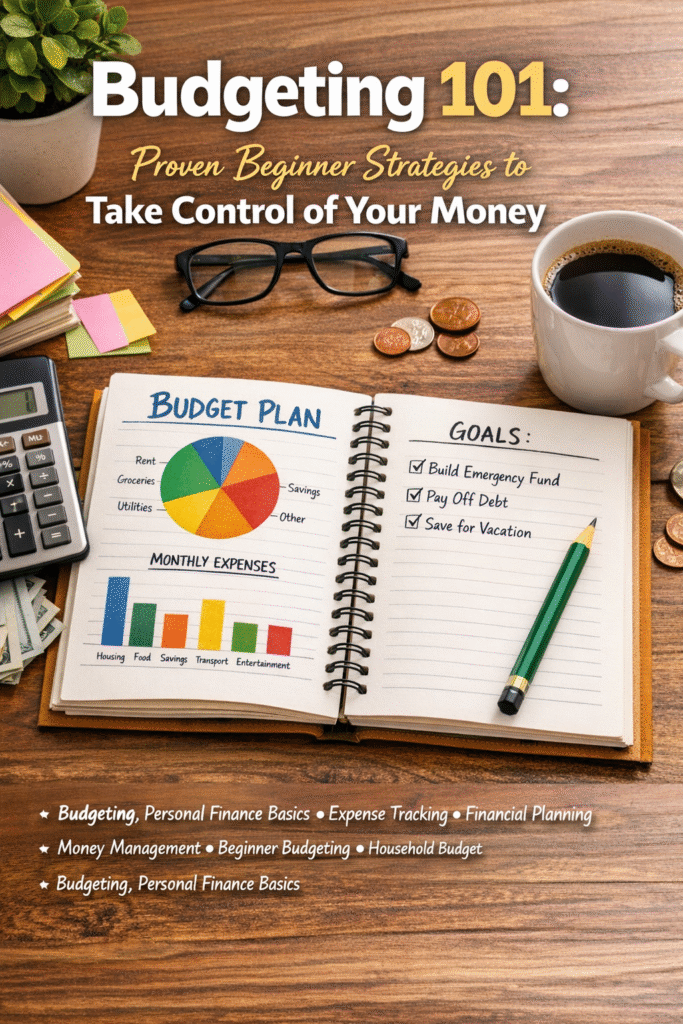
This rule changed how I viewed money:
- 50% for essentials (rent, food, utilities)
- 30% for wants (movies, dining out)
- 20% for savings and debt repayment
It’s flexible yet disciplined — perfect for beginners who want balance without burnout.
3. Automate Your Savings
Here’s a secret: automation is the lazy person’s best financial hack. I set up an auto‑transfer to my savings account right after payday. It felt invisible at first, but months later, that “invisible” money became my emergency fund.
4. Build an Emergency Fund
Life throws curveballs — medical bills, car repairs, job changes. Having 3–6 months of expenses tucked away means you can handle surprises without panic. It’s not just financial security; it’s peace of mind.
Building savings is only one part of financial stability. Managing spending, reducing debt, and increasing income are equally important for long-term financial freedom.
Related Articles You May Like:
5. Cut Small Leaks, Not Joy
Budgeting isn’t punishment. It’s about prioritizing what truly matters. I didn’t stop buying coffee — I just stopped buying three a day. Small tweaks keep your lifestyle enjoyable while freeing up cash for your goals.
6. Review and Adjust Monthly
Your budget should evolve with you. I treat my monthly review like a mini financial check‑in — what worked, what didn’t, what I can improve. It’s how budgeting becomes a habit, not a chore.
If you want a complete system to manage your money, increase your income, and build long-term financial freedom:
⭐ Most Popular (Best Value)
✔ Monthly Budget Planner
✔ Side Hustle Starter Kit
✔ Debt Payoff Planner
✔ Financial Freedom Blueprint (Ebook)
Get $39 worth of tools for just $12 – 👉 [Get Financial Freedom Toolkit]
💡 Final Thoughts
Budgeting is the foundation of financial freedom. It’s not about perfection; it’s about progress. Once you start tracking, saving, and adjusting, you’ll notice something powerful — your money starts working for you, not against you.
Disclaimer
This article is for educational purposes only and does not constitute financial advice. Always consult with a licensed financial advisor before making investment decisions.