
Introduction
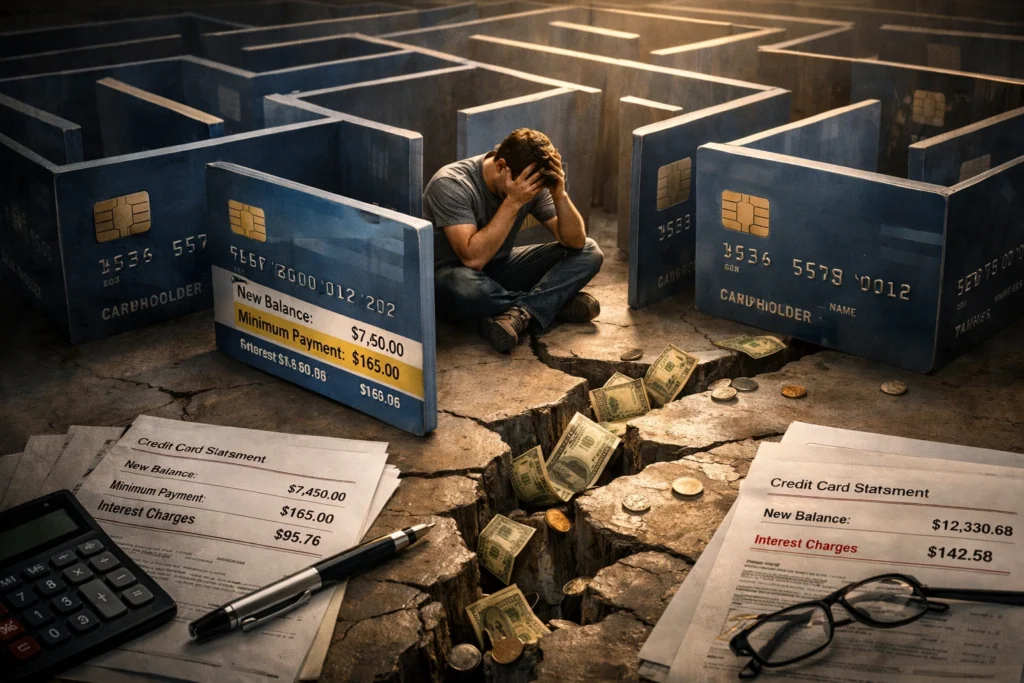
I started helping clients in the U.S. manage their finances, and I noticed a recurring pattern people weren’t drowning in debt because they overspent wildly, but because they misunderstood how credit card minimum payments work which is called as Credit Card Trap- .
The phrase “minimum payment” sounds harmless, even convenient. But in reality, it’s one of the biggest traps that silently drains your wealth and keeps you stuck in a cycle of debt.
If you’ve ever looked at your statement and thought, “I’ll just pay the minimum this month,” this article will show you why that decision could cost you thousands — and how to break free without sacrificing your lifestyle.
How Jason Stuck into Credit Card Trap
A client named Jason, a 29‑year‑old software engineer from Texas, once told me, “I always pay my bills on time, but my balance never goes down.” When we reviewed his credit card statements, we discovered the truth — he was paying only the minimum due.
His $8,000 balance at 19% interest would take over 17 years to pay off if he continued making minimum payments. The total interest? Nearly $9,000 — more than the original debt.
That’s the credit card trap in action.
(Interlink: Credit Card Mastery: How to Use Wisely Without Debt)
Step 1: Understanding the Minimum Payment – The Credit Card Trap
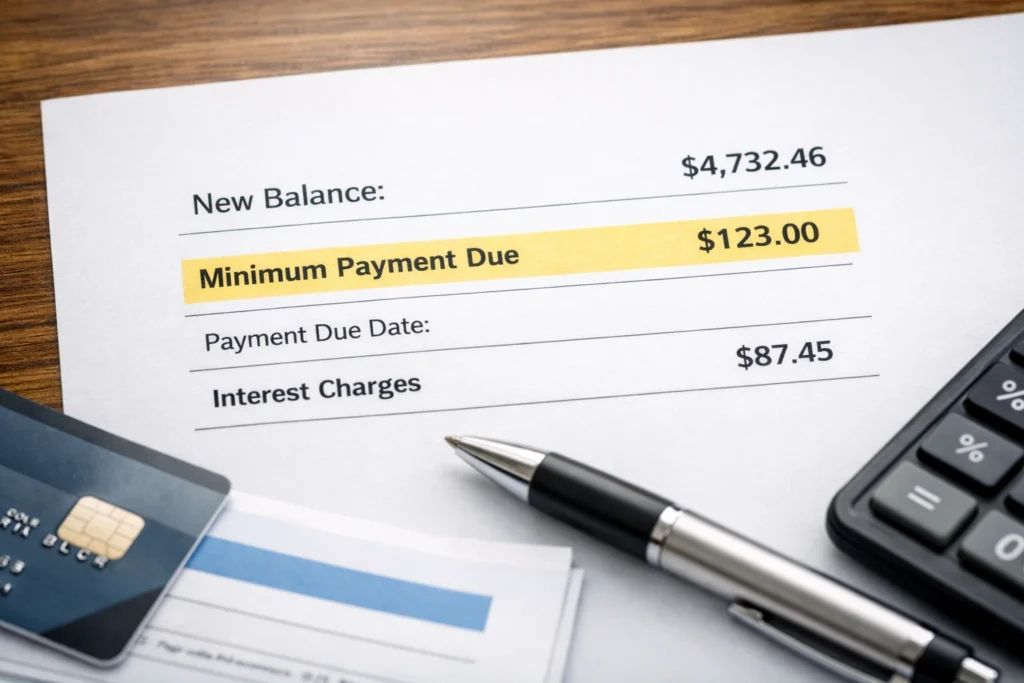
Credit card companies design minimum payments to keep you paying longer.
Typically, the minimum is 2%–3% of your balance. It covers interest and a tiny portion of the principal.
Example: If your balance is $5,000 and your minimum payment is 2%, that’s $100. But $80 of that might go toward interest, leaving only $20 to reduce your balance.
So even though you’re “paying,” your debt barely moves.
(Interlink: How to Become Debt‑Free Faster Without Sacrificing Your Lifestyle)
Step 2: The Hidden Cost of Paying Minimums
Let’s break it down with real numbers:
| Balance | Interest Rate | Minimum Payment | Time to Pay Off | Total Interest Paid |
|---|---|---|---|---|
| $5,000 | 18% | $100 | 17 years | $6,400 |
| $10,000 | 20% | $200 | 19 years | $13,800 |
That’s money you could have invested, saved, or used for your family’s future.
Use the 💳 Debt Payoff Planner to visualize how much faster you can clear your balance by increasing payments — even by $50 a month.
(Interlink: Slow and Steady Wealth: Proven Habits That Create Lasting Riches)
Step 3: Why Credit Card Companies Love Minimum Payments
Credit card issuers profit from interest. The longer you take to pay, the more they earn.
They even design statements to highlight the “minimum due” prominently, while the “full balance” is tucked away.
It’s psychological — they make the smaller number look more appealing.
But here’s the truth: minimum payments protect their profits, not your finances.
(Interlink: Financial Literacy: Skills to Master Your Money Better)
Step 4: How to Escape the Trap Without Stress
You don’t have to cut up your cards or live on rice and beans. You just need a smarter plan.
1. Pay more than the minimum. Even an extra $50–$100 per month can shave years off your repayment timeline.
2. Automate payments. Set up automatic transfers using the 📊 Monthly Budget Planner to ensure consistency.
3. Consolidate high‑interest debt. Consider a personal loan with lower interest. Use the Complete Financial Toolkit Bundle to compare rates and calculate savings.
4. Track spending. Review your statements monthly. Identify recurring expenses you can reduce without sacrificing comfort.
(Interlink: Personal Loans: When to Use or Avoid Them – Explained Better)
Step 5: Real‑Life Example — The Power of Paying More
A client named Rachel had $12,000 in credit card debt at 18% interest. Her minimum payment was $240.
She decided to pay $400 monthly instead. Result? She cleared her debt in 3.5 years instead of 19, saving over $9,000 in interest.
That’s the power of intentional payments.
Step 6: Frequently Asked Questions
Q1: What happens if I only pay the minimum every month? You’ll stay in debt much longer and pay thousands in interest.
Q2: Does paying the minimum hurt my credit score? Not directly, but high balances increase your credit utilization ratio, which lowers your score.
Q3: How can I pay off credit cards faster? Use the 💳 Debt Payoff Planner to prioritize high‑interest cards and automate payments.
Q4: Should I close old credit cards after paying them off? Not necessarily — keeping them open can help your credit utilization ratio.
(Interlink: Emergency Funds Explained: How to Build Your Ultimate Financial Safety Net)
Step 7: Emotional Side of Credit Card Debt
Debt isn’t just numbers — it’s emotional. It can cause stress, guilt, and even relationship tension.
But every payment above the minimum is a step toward freedom.
Jason once told me, “I used to dread my credit card bill. Now, I feel proud every time I pay extra.” That’s the mindset shift that builds wealth.
Step 8: Smart Tools to Stay Debt‑Free
You don’t need complicated spreadsheets or financial jargon. You just need the right tools:
- 📊 Monthly Budget Planner → Track income, expenses, and payments.
- 💳 Debt Payoff Planner → Visualize progress and interest savings.
- 📘 Financial Freedom Blueprint Ebook → Learn strategies to stay debt‑free.
- 🚀 Side Hustle Starter Kit → Generate extra income to accelerate debt payoff.
- 🛠️ Complete Financial Toolkit Bundle → All‑in‑one system for budgeting, debt tracking, and savings goals.
Each tool helps you take control of your finances and escape the credit card trap for good.
Step 9: The Verdict — Freedom Is Worth More Than Convenience
Minimum payments may feel convenient, but they come at a steep price. They keep you stuck, paying interest instead of building wealth.
The solution isn’t extreme — it’s consistent, informed action. Start today by increasing your payment, tracking progress, and using smart tools to stay on course.
Your future self will thank you.
Disclaimer
This article is for educational purposes only and does not constitute financial advice. Always consult with a certified financial advisor before making major financial decisions.