

Introduction
When I first started helping families in the U.S. manage their finances, I realized something powerful — most people don’t go broke because they spend recklessly; they go broke because they don’t have a plan. Becoming debt‑free faster isn’t about cutting every joy out of your life. It’s about smart financial planning that lets you enjoy today while building a secure tomorrow.
If you’ve ever felt trapped by credit card bills, student loans, or car payments, this guide will show you how to pay off debt efficiently — without giving up your lifestyle.
Melisa Become Debt‑Free Faster
A client named Melissa, a 33‑year‑old marketing professional from Denver, once told me, “I want to be debt‑free, but I don’t want to live like a monk.” She had $18,000 in credit card debt and $12,000 in student loans. Instead of cutting everything fun, we built a Debt Freedom Plan that balanced her lifestyle and goals.
Within 18 months, Melissa cleared her credit cards and started saving for a vacation — all while keeping her favorite weekend brunches.
(Interlink: Tired of Debts? How to Choose the Right Strategy for You)
Step 1: Know Your Debt — Awareness Is Power to Become Debt-Free Faster
Before you can fix it, you need to face it. List every debt — credit cards, loans, car payments, and even small balances.
Use the 💳 Debt Payoff Planner to organize everything in one place. It has interest, payoff timelines, and progress tracking features.
Pro Tip: Focus on the interest rate, not just the balance. High‑interest debts (like credit cards) should be your top priority.
(Interlink: Financial Literacy: Skills to Master Your Money Better)
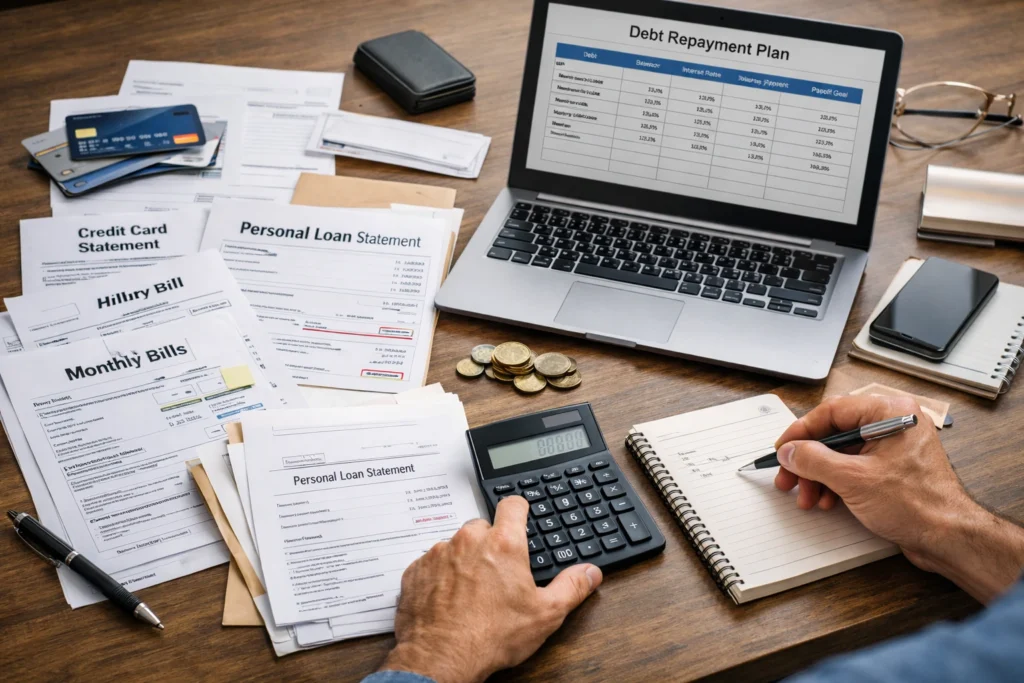
Step 2: Choose the Right Payoff Strategy
There’s no one‑size‑fits‑all approach. The two most effective methods are:
| Method | Description | Best For |
|---|---|---|
| Debt Snowball | Pay off smallest debts first for quick wins. | Motivation seekers |
| Debt Avalanche | Pay off highest interest debts first. | Mathematically efficient planners |
Melissa used the Debt Avalanche method — saving $1,200 in interest over a year.
(Interlink: Credit Card Mastery: How to Use Wisely Without Debt)
Step 3: Automate Your Payments
Automation is your secret weapon. Set up automatic transfers for minimum payments and extra contributions.
Use the 📊 Monthly Budget Planner to allocate funds for debt payments while keeping room for entertainment and savings.
Example: A couple from Texas automated their payments and reduced missed bills to zero — saving $300 in late fees annually.
(Interlink: Automated Savings: The Easy Way to Build Wealth Consistently)
Step 4: Keep Your Lifestyle — But Smarter
You don’t have to give up coffee, vacations, or dining out. You just need to optimize spending.
Smart swaps:
- Brew coffee at home 4 days a week, treat yourself on weekends.
- Use cashback cards for essentials.
- Plan vacations with travel rewards.
Use the 🚀 Side Hustle Starter Kit to create extra income streams — freelance work, digital products, or affiliate marketing. That extra $200–$500/month can accelerate your debt payoff dramatically.
(Interlink: The FIRE Movement Explained: How to Retire Early & Live Free)
Step 5: Build an Emergency Fund
Debt freedom isn’t just about paying off — it’s about staying free. Without an emergency fund, one unexpected expense can throw you back into debt.
Start with $1,000, then grow it to 3–6 months of expenses. Use the 📘 Financial Freedom Blueprint Ebook to map out your savings goals and automate contributions.
(Interlink: Emergency Funds Explained: How to Build Your Ultimate Financial Safety Net)
Step 6: Track Progress and Celebrate Wins
Debt payoff is a journey — celebrate milestones! Every $1,000 paid off deserves recognition.
Use the 🛠️ Complete Financial Toolkit Bundle to track your progress visually. It combines budgeting, debt tracking, and savings goals in one dashboard.
Example: A family in Ohio used the toolkit and cleared $25,000 in debt in 20 months — while still taking one family vacation each year.
Step 7: Frequently Asked Questions
Q1: How can I pay off debt faster without cutting expenses? Increase income through side hustles, cashback rewards, or bonuses. Use the 🚀 Side Hustle Starter Kit to start earning extra today.
Q2: Should I consolidate my debt? Yes, if your new interest rate is lower and you can manage payments responsibly.
Q3: How do I stay motivated? Track progress visually and reward yourself for milestones — small celebrations keep momentum alive.
Q4: What’s the best tool for managing multiple debts? The 💳 Debt Payoff Planner — it simplifies tracking, prioritization, and progress visualization.
(Interlink: Slow and Steady Wealth: Proven Habits That Create Lasting Riches)
Step 8: Avoid Common Mistakes
- Paying only minimum balances.
- Ignoring high‑interest debts.
- Using new credit while paying off old debt.
- Not budgeting for fun — which leads to burnout.
Debt freedom is about balance, not deprivation.
Step 9: Emotional Side of Debt
Debt can feel heavy — emotionally and mentally. But every payment you make is a step toward freedom.
Melissa once said, “I used to dread checking my bank account. Now, I feel proud every time I make a payment.”
That’s the transformation you deserve.
Step 10: The Verdict — Freedom Without Sacrifice
You don’t have to give up your lifestyle to become debt‑free. You just need a plan that works for you.
Start today with the 📊 Monthly Budget Planner, 💳 Debt Payoff Planner, 🚀 Side Hustle Starter Kit, 📘 Financial Freedom Ebook, and 🛠️ Complete Financial Freedom Toolkit Bundle — your complete system for living debt‑free while enjoying life.
Disclaimer
This article is for educational purposes only and does not constitute financial advice. Always consult with a certified financial advisor before making major financial decisions.