
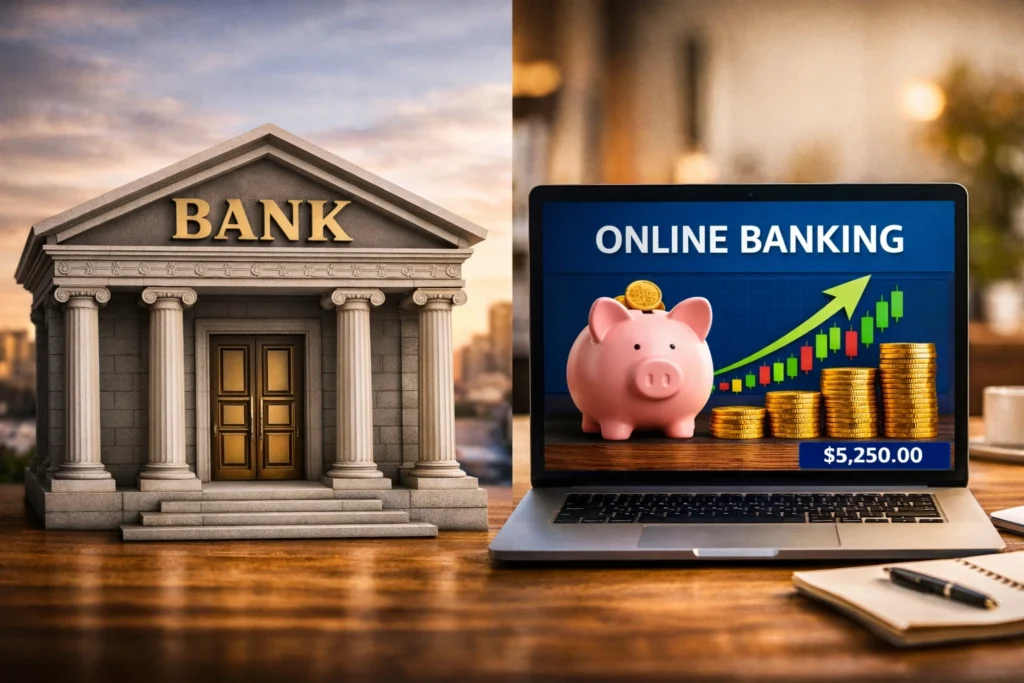
When I opened my very first savings account in the U.S., I was overwhelmed by the choices: traditional banks, online banks, credit unions, and even high-yield savings accounts. Each promised something different — higher interest, lower fees, or better accessibility. For beginners, choosing the right savings account can feel like navigating a maze. But with the right approach, you can find an account that balances security, growth, and convenience.
If you want a simple way to stay organized while building your savings, you can use a structured system like a Budget Planner to track your income and expenses from the beginning.
Why Right Savings Accounts Matter
Savings accounts are the foundation of financial planning. They provide a safe place to store money while earning interest. More importantly, they give you liquidity — quick access to funds when you need them.
I’ve seen friends jump straight into investing without a proper savings account, only to struggle when emergencies hit. That’s why I always recommend starting with a solid savings base before moving into investments. (See my post on Emergency Funds Explained for more on this.)
Types of Savings Accounts
1. Traditional Savings Accounts
Offered by brick-and-mortar banks. They’re easy to open but often come with low interest rates.
2. High-Yield Savings Accounts
Usually offered by online banks. These accounts provide higher interest rates, making them ideal for beginners who want their money to grow faster.
3. Credit Union Savings Accounts
Credit unions often provide better customer service and competitive rates. They’re community-focused and can be a great option if you qualify.
4. Money Market Accounts
These accounts combine savings with limited check-writing privileges. They often require higher minimum balances but offer better returns.
What Beginners Should Look For
When choosing your first savings account, focus on these factors:
- Interest Rate (APY): Higher APY means faster growth.
- Fees: Avoid accounts with monthly maintenance fees.
- Accessibility: Online banking and mobile apps make managing money easier.
- Minimum Balance Requirements: Beginners should choose accounts with low or no minimums.
If you’re serious about improving your finances, tracking your money consistently is just as important as choosing the right account.
👉 You can use this simple system here: [Monthly Budget Planner]

Real-Life Example
A friend of mine started with a traditional savings account that offered just 0.05% APY. After learning about high-yield accounts, she switched to an online bank offering 4% APY. Within a year, her savings grew significantly faster — without any extra effort.
This simple switch taught her the importance of comparing options before committing.
Step-by-Step Guide for Beginners
Define Your Goal
Are you saving for emergencies, a vacation, or long-term growth?
Compare Rates
Use comparison sites to check APYs across banks.
Check Fees
Choose accounts with zero monthly fees.
Test Accessibility
Make sure the bank offers a user-friendly app.
Start Small, Grow Steadily
Even $50 a month builds momentum.
Interlinks
Emergency Savings or Investment Portfolio – What is needed First?
Savings Today or Wealth Tomorrow? Choosing the Right Path
Investing for Beginners: Start Growing Your Wealth
Quick Comparison Table
| Account Type | Best For | APY Potential | Fees |
|---|---|---|---|
| Traditional Bank | Easy access | Low | Possible |
| High-Yield Online | Growth | High | Minimal |
| Credit Union | Community focus | Moderate | Low |
| Money Market | Flexibility | Moderate | Higher minimums |
Conclusion
Choosing the right savings account is the first step toward financial independence. For beginners, the key is to balance safety and growth. Start with an account that offers a competitive APY, low fees, and easy access. Once you build your savings foundation, you’ll be ready to explore investments and other wealth-building strategies.
⭐ Most Popular (Best Value)
If you want a complete system to manage your money, increase your income, and build long-term financial freedom:
✔ Budget Planner
✔ Side Hustle Starter Kit
✔ Debt Payoff Planner
✔ Financial Freedom Blueprint
Get $39 worth of tools for just $12
👉 [Get Financial Freedom Toolkit]
Disclaimer
This article is for educational and informational purposes only and does not constitute financial, investment, or legal advice. The examples shared reflect personal experiences and general market principles. Always conduct your own research or consult a licensed financial advisor before making investment decisions.